By Daisy Yan Du
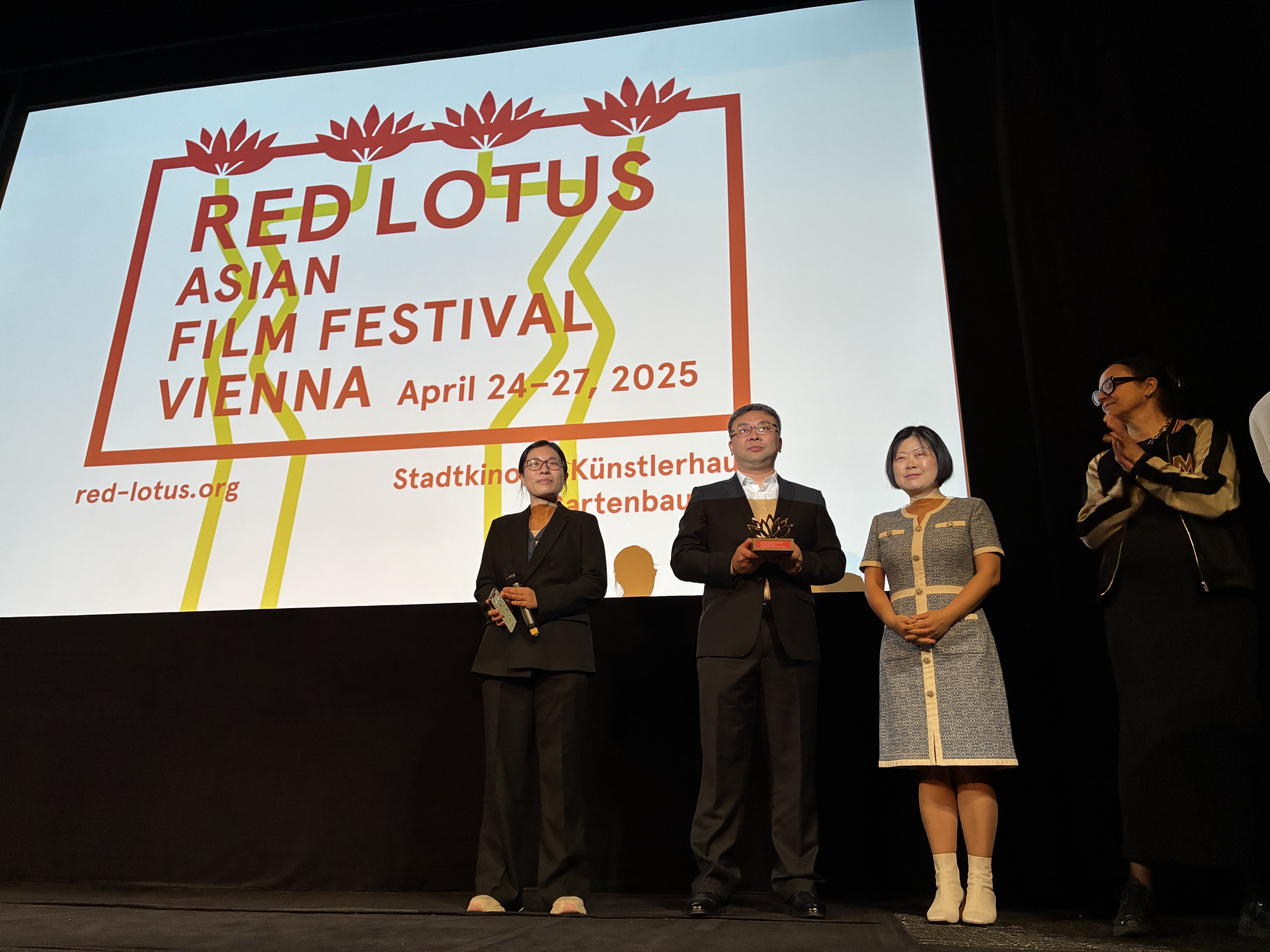
It is my great pleasure to present the Lifetime Achievement Award to the Shanghai Animation Film Studio. With a history spanning nearly eight decades, the studio traces its origins to the Animation Group (katong zu) established at the Northeast Film Studio in Changchun in October 1946. The Animation Group was relocated to Shanghai in March 1950 and became part of the Shanghai Film Studio before gaining independence on April 1, 1957, when it was formally established as the Shanghai Animation Film Studio. As a state-owned enterprise, the Shanghai Animation Film Studio remained China’s sole professional animation studio throughout the socialist years from the 1950s to the 1970s.
The studio’s prolific output accounts for nearly 90% of all Chinese animated films produced during its heyday, with many now regarded as timeless classics. To say that the Shanghai Animation Film Studio was Chinese animation for decades would be no exaggeration.
Yet beyond quantity, the studio distinguished itself through artistic excellence. Rooted in China’s fine arts traditions, it produced culturally significant films that educated, inspired, and entertained generations of Chinese children. By adapting classical literature and reinventing traditional arts for animation, the studio pioneered what became known as the Chinese School of Animation. Masterpieces like the cel-animated Uproar in Heaven (1961–1964) and Nezha (1979) brought legendary tales to life, while ink-painting animations such as Little Tadpoles Look for Mama (1960) and The Herd Boy’s Flute (1963) achieved a poetic synthesis of movement and traditional ink-painting aesthetics. These works represent the pinnacle of Chinese animation as an art form.

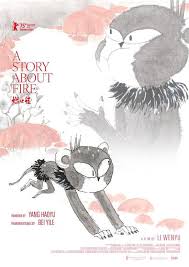
This commitment to artistry endures in the digital age today. In an era dominated by commercial CGI blockbusters like Monkey King: Hero Is Back (2015) and Nezha 2 (2025), the Shanghai Animation Film Studio continues to uphold its artistic standard by harmonizing traditional arts with digital technologies. Recent works like A Story About Fire (2025, see the poster below) demonstrate this ethos, blending ethnic minority folklore with the expressive xieyi ink-painting style. Similarly, Goral Flying (2026)—which has been in the making for more than a decade—marks China’s first CGI ink-painting animated feature film, using CGI technologies to revive the analog ink-painting animation aesthetic in the 1960s. In an industry increasingly driven by commercial imperatives, the Shanghai Animation Film Studio remains a steadfast guardian of artistic integrity.
The studio’s global influence is equally remarkable, particularly in Europe. Its 1956 debut at the Venice International Children’s Film Festival inaugurated a decades-long presence at international film festivals, even during China’s Cold War isolation. Favoring European venues in Italy, France, Germany, the UK, Switzerland, Czech, Denmark, Portugal, Yugoslavia, and others, the studio found kinship with the art-film tradition in Europe. The Animafest Zagreb notably shaped Chinese animation in the 1980s, evident in A Da’s works and echoed in A Story About Fire’s minimalist formal abstraction—a deliberate contrast to Disney’s realism.
Today, as we gather at the Red Lotus Asian Film Festival Vienna 2025, we celebrate not just the studio’s past triumphs, but its enduring vision: one that honors tradition while embracing the future. This award recognizes its historical achievements, applauds its present efforts and innovations, and anticipates the boundaries it has yet to cross.
To the Shanghai Animation Film Studio—thank you. Your art has inspired generations, and your legacy will continue to illuminate the world of animation in China and beyond.
我非常荣幸地将终身成就奖授予上海美术电影制片厂。这家拥有近八十年历史的制片厂,其前身可追溯至1946年10月成立于长春东北电影制片厂的卡通组。1950年3月,卡通组南迁上海,并入上海电影制片厂;1957年4月1日,它正式独立建制,成为国营上海美术电影制片厂。在整个社会主义时期的五六十年代至七十年代,该厂始终是中国唯一的专业动画制作机构。
在其鼎盛时期,美影厂的产量占据了中国动画电影总产量的近90%,其中许多作品如今已被奉为不朽经典。可以说,在数十年间,上海美术电影制片厂即代表着中国动画——此言毫不为过。
然而,美影厂的卓越不仅在于产量,更在于其艺术高度。它根植于中国美术传统,创作出兼具文化深度与教育意义的作品,滋养了几代中国儿童的心灵。通过将古典文学与传统艺术形式转化为动画语言,该厂开创了举世闻名的”中国动画学派”:赛璐璐动画《大闹天宫》(1961-1964)与《哪吒闹海》(1979)让神话英雄跃然银幕;水墨动画《小蝌蚪找妈妈》(1960)和《牧笛》(1963)则实现了动态影像与传统美学的诗意交融。这些作品至今仍代表着中国动画艺术的巅峰成就。
这种艺术追求在数字时代依然延续。当《西游记之大圣归来》(2015)与《哪吒之魔童闹海》(2025)等商业CGI大片主导市场时,美影厂始终致力于传统艺术与数字创新的融合。新作《燃比娃》(2025)将少数民族传说与写意水墨风格结合,而历时十余年打造的《斑羚飞渡》(2026)更成为中国首部CGI水墨动画长片,以数字技术复现1960年代水墨动画的胶片质感。在日益商业化的行业环境中,美影厂始终是艺术初心的坚守者。
其国际影响力同样令人瞩目,尤其在欧洲。自1956年首次亮相威尼斯国际儿童电影节起,即便在冷战隔绝时期,美影厂作品仍持续登陆意大利、法国、德国、英国、瑞士、捷克、丹麦、葡萄牙和南斯拉夫等国的电影节,与欧洲艺术电影传统形成深层共鸣。萨格勒布动画电影节更深刻影响了1980年代中国动画创作——从阿达的作品到《燃比娃》极简的形式抽象,无不体现着与迪士尼写实主义的自觉分野。
今天,在2025维也纳红莲亚洲电影节的现场,我们不仅致敬美影厂的历史荣光,更礼赞其贯通古今的视野。这座奖杯致敬其辉煌过往,嘉许其当下创新,更期待它未来将跨越的疆界。
致上海美术电影制片厂——感谢您们。您们的艺术启迪了数代人,这份传奇将继续照亮中国乃至世界的动画星空。
