
By Mengyang XU
In August 2026, Chinese Foreign Ministry spokesperson Mao Ning shared an AI-generated video of a spectacular Chinese Celestial Palace on X (Figure 1). The clip has almost no dialogue or narrative. It simply shows figures in flowing robes moving through the clouds, with enormous palaces rising in the background. Chinese media quickly picked up the video and described it as another example of “Chinese aesthetics going viral overseas” (Figure 1). But despite this promotional framing, what interests me most is the way Chinese architecture is represented in the AI film.
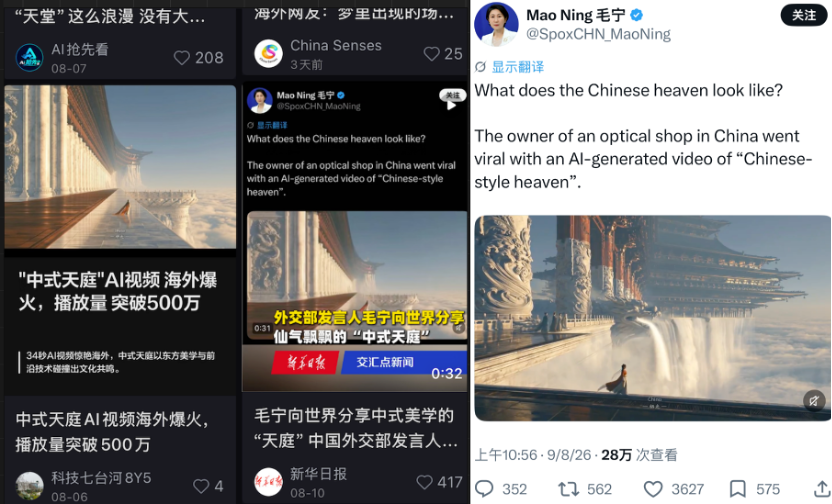
Figure 1: Mao Ning’s X post and circulation in Chinese media of the AI-generated “Chinese celestial palace” video.
A Chinese Heaven in Collage
The creator is Chen Aijun, an optical shop owner in Chengdu who makes AI images and videos in his spare time. His workflow moves from still images to animation. He first generates still images through text-to-image software such as Midjourney, then animates them with image-to-video platforms such as Kling or Jimeng.[1]
In other words, the architecture is not designed in the conventional architectural sense. There is no floor plan behind the image, nor is there a complete structural system. The model works from visual patterns. It learns what kinds of forms are commonly associated with prompts such as “Chinese palace” or “celestial realm,” then produces new images from those associations.
This helps explain both the beauty and the strangeness of the video. At first glance, the celestial palaces look unmistakably Chinese. They have sweeping roofs, tall columns, decorated brackets, and monumental stone platforms. Everything seems immediately recognizable. Yet the longer one looks, the less structurally convincing the buildings become.
Traditional Chinese timber architecture follows a highly organized structural logic. Historical building systems were also based on clear proportional and modular principles. The Yingzao Fashi [2], for example, organized timber construction through a modular system based on cai and fen. The dimensions and proportions of structural components were defined in relation to these units. Even decorative elements were usually integrated into the structural system rather than simply attached to it.
The AI palaces, however, work rather differently. They preserve the appearance of individual architectural elements while breaking the relationships between them. Eaves appear where no roof should logically exist. For example, in one shot, sloping Chinese roofs are placed beneath the building like a decorative base (Figure 2).
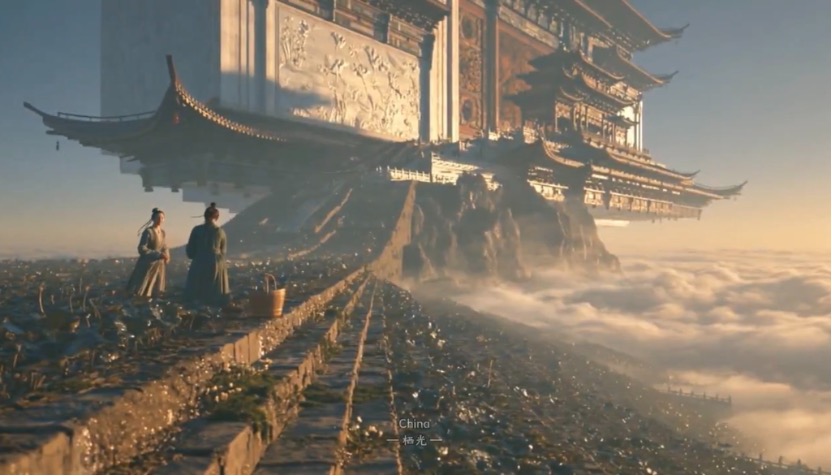
Figure 2: A roof-like form beneath the main architectural mass.
The result preserves the visual language of traditional Chinese architecture while departing from its structural logic. It is closer to a recombination of architectural signs. Components are repeated as visual patterns rather than used as parts of a structural system. In this sense, AI seems to understand Chinese architecture as a visual vocabulary without fully understanding its grammar. It knows that certain roof forms, columns, and structural details belong to the category of a “Chinese celestial palace.” But it does not need to understand why these elements are placed where they are or what they are supposed to support.
This gives the architecture a collage-like quality. The building is broken down into visual components and recombined within the image rather than organized as a coherent space. This is why the video sometimes produces structures that look impressive at first but become almost paradoxical when examined more closely.
A Heaven Where Uproar Is Impossible
Another thing that caught my attention is the relationship between foreground and background. In the AI-generated Chinese Celestial Palace video, many of the clips use a similar composition. One or two figures appear in the foreground or middle ground, while an enormous palace stands far behind them (Figure 3).
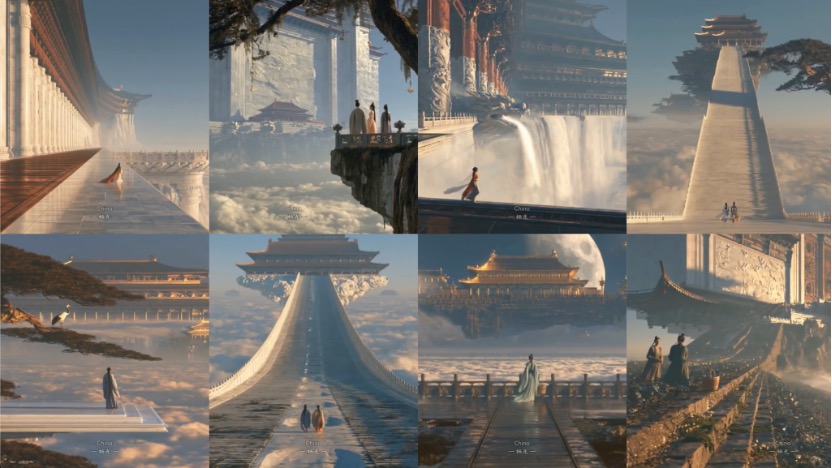
Figure 3: The repeated compositional pattern.
This arrangement allows the human body to serve as a reference for scale without placing it in direct contact with the building. Distance makes the architecture impossibly large without immediately making it look absurd.
The emotional power of these images depends heavily on scale. Their grandeur comes from the fact that the buildings exceed the proportions of ordinary human life. Stairways seem to stretch all the way into the sky. Corridors look wide enough for ten trucks to drive through side by side. In some shots, a single block of stone beneath a column appears taller than a person. The architecture creates a sense of the sublime. It impresses us because it overwhelms the human body.
But this also creates a practical problem. Architecture is not only something to be looked at. It is also a space that people need to enter, move through, and interact with. We rarely see rooms in these videos. Nor do we see how one part of the building connects to another. In fact, we almost never enter the buildings at all. The celestial palace is presented mainly through its exterior.
In this sense, it is almost an architecture without an interior. It is designed to be seen rather than used. If these buildings really existed at the scale suggested by the video, ordinary human life inside them would be exhausting. Walking from one room to another could take half an hour. A trip from the living room to the bedroom might become an odyssey. Perhaps this is also part of the reason why the buildings look like Heaven rather than the human world. After all, immortals may not mind crossing a kilometer-long terrace every time, because they can fly.
This relationship between image and use becomes especially clear when we compare the AI celestial palace with the Heavenly Court in Uproar in Heaven (Danao tiangong, 1961).[3] The architecture in Uproar in Heaven is not realistic either. The film transforms elements from Chinese painting, opera, and traditional architecture. Its spaces are highly stylized and sometimes physically impossible.[4] Yet despite this visual freedom, the spaces in Uproar in Heaven are remarkably functional in narrative terms. The Heavenly Court is not mainly presented as one enormous architectural object. Instead, we encounter it as a series of places where specific events happen.
The Lingxiao Hall is where the Jade Emperor receives officials and where the hierarchy of Heaven becomes visible. The Peach Garden is where Sun Wukong wanders around and steals peaches. The imperial stables exist because he is sent there to look after the heavenly horses. Other spaces appear because the story needs a place for a banquet or a punishment. Laojun’s residence and the Eight-Trigrams Furnace become sites of Sun Wukong’s theft and attempted execution (Figure 4).

Figure 4: Celestial spaces in Uproar in Heaven.
Architecture in Uproar in Heaven is designed around how characters use space. These spaces do not have to fit neatly into a complete architectural master plan. What matters is that each one has a clear relationship to action.
This is very different from the AI video. The celestial architecture in Uproar in Heaven may be stylized and physically impossible, but it is still a space in which bodies can act. The AI palace looks far more photorealistic, yet it often lacks this sense of use. The figures stand. They walk slowly. They look at the palace. But they rarely use it. They behave more like visitors than residents.
As the scale of the architecture increases, the possibility of interaction seems to decrease. The palace becomes a spectacle rather than a setting. It is hard to imagine Sun Wukong wreaking havoc in this kind of celestial realm, because against architecture of this scale, he is such a tiny monkey.
The Unexpected Return of Narrative
What is interesting, however, is that this missing narrative dimension was unexpectedly restored through the way the video circulated online, probably in a way that neither the creator, the people who reposted it, nor Mao Ning herself could have anticipated.
When I looked closely at the comments and reposts of the video that Chinese media described as having gone viral on international social media platforms, I noticed that some viewers did not treat the imagery as something completely new.
Some said that this was exactly how they imagined a xianxia world. Others said they wished live-action xianxia dramas looked like this. Rather than simply responding, “What an amazing Chinese palace,” some viewers immediately placed the architecture inside stories they already knew (Figure 5).
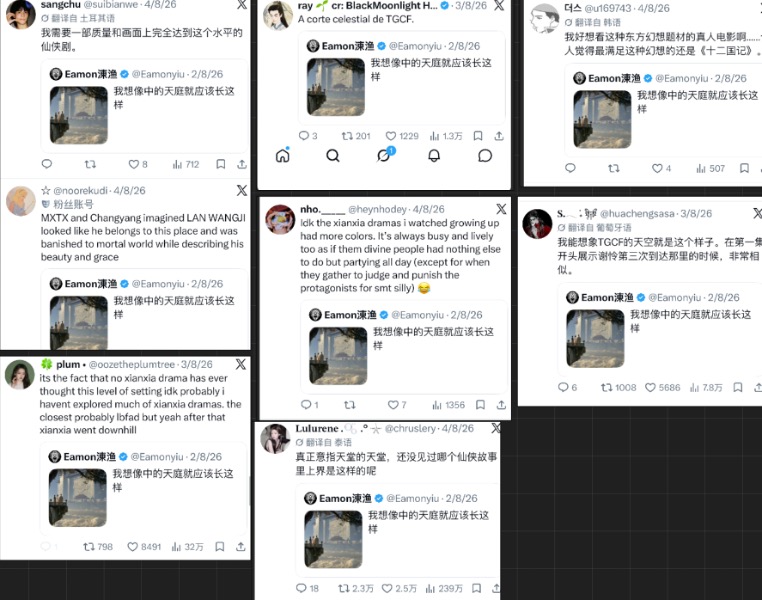
Figure 5: X viewers associate the celestial imagery with xianxia dramas and familiar fictional worlds.
One of the titles that appeared repeatedly in the comments and reposts was Heaven Official’s Blessing (Tianguan Cifu), a Chinese animated series adapted from the novel of the same name.[5] One viewer imagined the palace as the place where one of the characters in the animated series might propose to another character. Others imagined scenes from the story taking place among these enormous terraces and clouds (Figure 6).

Figure 6: X viewers connect the palace to Heaven Official’s Blessing and imagined scenes involving its characters.
This response complicates the familiar media narrative that foreign audiences are simply discovering “Chinese aesthetics” through a spectacular AI video. Some of these viewers were already familiar with the visual language of the Chinese celestial realm through xianxia animation, and online fandom. The AI video did not introduce them to an entirely new world. It gave visual form to a world they had already imagined.
More importantly, this familiarity changes the function of the architecture. Within the video itself, the palace remains largely empty of action. But once viewers connect it to familiar television dramas or animated series, that emptiness becomes available for narrative. The palace can now become a place for a proposal, a reunion, or another imagined scene. In this way, the audience supplies what the AI image leaves unresolved.
AI is exceptionally good at producing images that look like architecture. But for architecture to become more than an image, people should be able to imagine themselves acting within it. A building becomes a world when bodies move through it and events take place there. This is where the comparison with Uproar in Heaven comes full circle. In the animated film, narrative gives architecture its function from the beginning. In this AI video, architecture appears first as spectacle, and narrative arrives later through the audience.
The AI celestial palace therefore reveals a curious tension between architectural image and architectural space. AI produces spectacular architectural images by recombining recognizable elements of Chinese architecture and pushing them beyond human scale. Yet this same monumentality weakens the building’s relationship to the human body and to inhabitation. In this case, however, that missing narrative unexpectedly returns through viewers’ associations with another Chinese animated work. The AI-generated image provides the palace. The viewers turn it into a place.
[1] Luo Tianyi and Guo Yuefeng, “‘中式天庭’视频在海外收获500万播放 创作者竟是成都一名眼镜店老板,” Cover News, republished in Sina Finance, August 8, 2026, https://finance.sina.com.cn/jjxw/2026-08-08/doc-inimrkxm6247780.shtml.
[2] The Yingzao Fashi, first issued in 1103 during the Song dynasty, is the oldest surviving complete Chinese architectural manual.
[3] Uproar in Heaven (Da Nao Tiangong), directed by Wan Laiming (Shanghai: Shanghai Animation Film Studio, 1961–1964).
[4] Fu Guangchao, “纪念严定宪|《大闹天宫》的创作前后跨了4年,” The Paper, December 26, 2022, https://www.thepaper.cn/newsDetail_forward_21310151.
[5] Aniplex, “Introduction,” official Japanese website for Heaven Official’s Blessing, Season 2, https://tgcf-anime.com/introduction/.
Bio:
Mengyang XU is a PhD student in the Division of Humanities at the Hong Kong University of Science and Technology. Her research focuses on the backgrounds in Chinese animation, including both traditional hand-drawn animation and CGI (computer-generated-imagery) animation.
: An Architectural Perspective)