By Mengxue Wei
When discussing 21st-century Chinese animation, it is impossible to overlook the animated film Monkey King: Hero Is Back (2015). The film’s journey was nothing short of legendary, grossing a total of 956 million RMB at the box office and convincingly proving the commercial viability of Chinese animation. Before the release of Monkey King: Hero Is Back, Chinese animated productions often struggled with funding shortages, leading many projects to halt production. However, in the wake of the film’s success, major companies quickly recognized the economic potential of the animation industry. In 2016 alone, there were 149 investment and financing deals in Chinese animation, totaling more than 4.6 billion RMB.[1] Today, Chinese animation has developed a relatively mature market. Animated character stands are commonly displayed in shopping malls (see Figure 1), and a wide variety of animation-related products continue to emerge (see Figure 2).
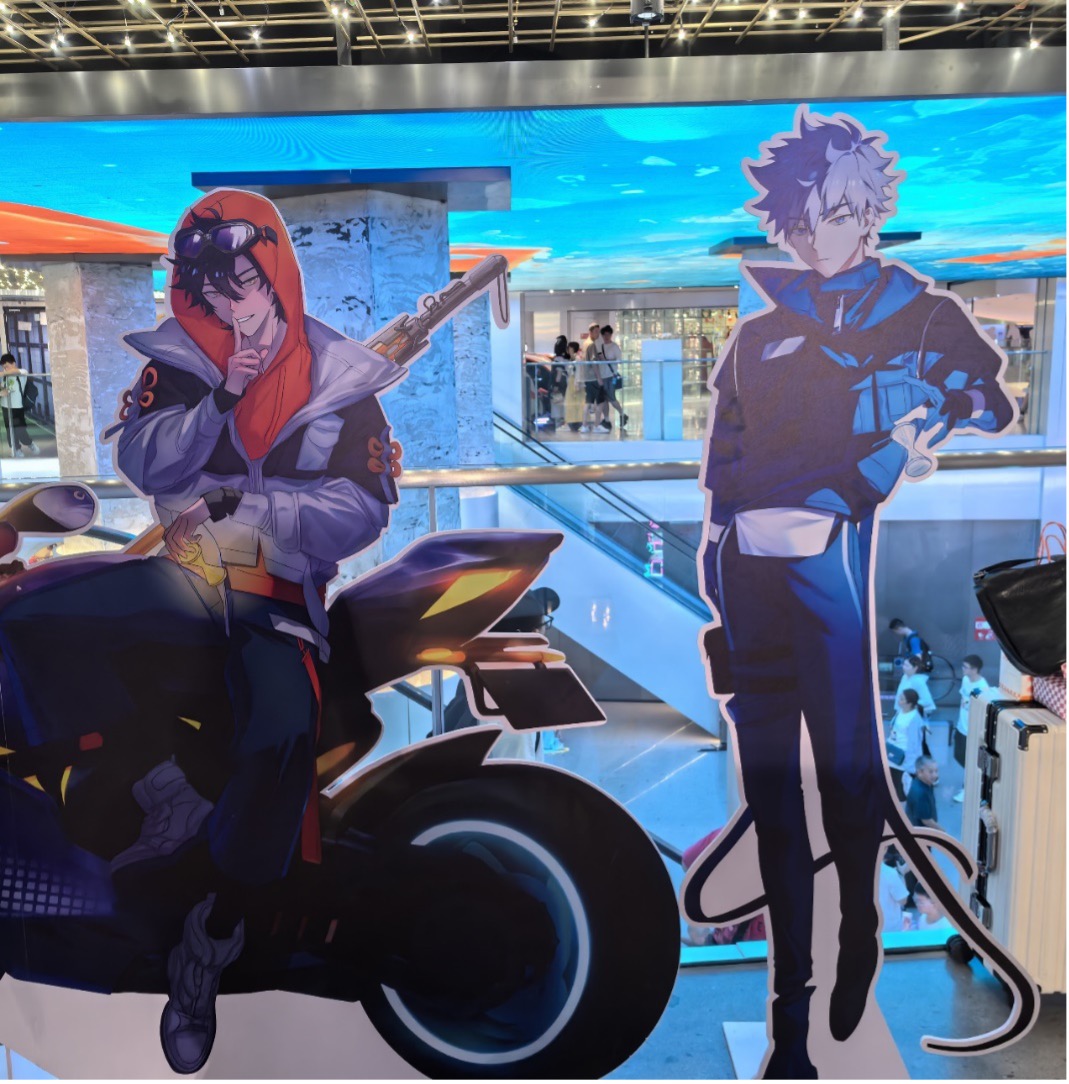
Fig 1: Character stands of the Chinese animation Link Click (2021) in a shopping mall (photo taken by the author).
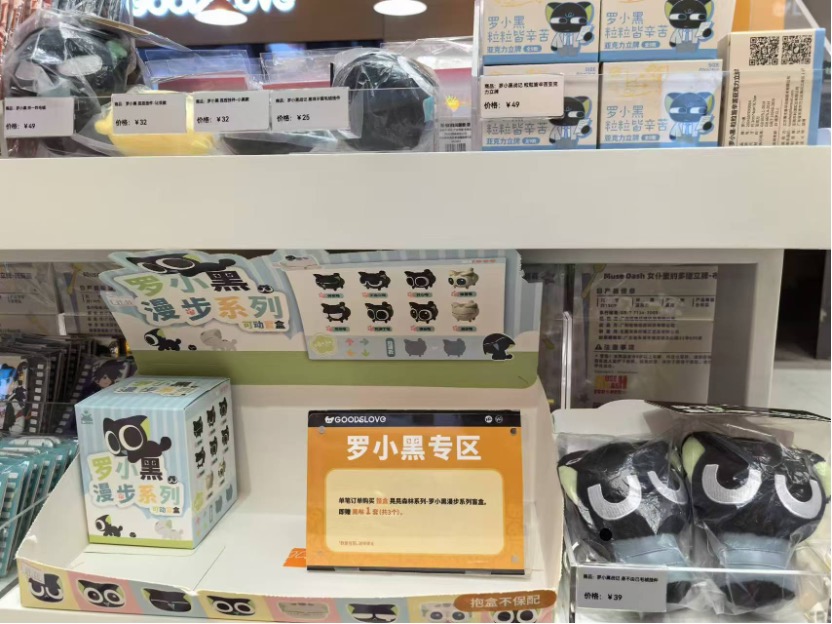
Fig 2: Animation products of the Chinese animation The Legend of Hei (2019) in a retail store (photo taken by the author).
This success can be largely attributed to Chinese animation fans, who have devoted considerable effort, financial resources, and emotional investment to supporting the industry. It was their spontaneous promotion and steadfast support that enabled Monkey King: Hero Is Back—which initially received just 7.25% of opening-day screenings and was largely overlooked by theaters—to reverse its fortunes and ultimately create a miracle in the history of Chinese animation. This achievement, in turn, attracted significant capital investment and paved the way for the release of more high-quality domestic animations. The formation of the Chinese animation fan base was not an overnight occurrence but rather the result of a long process of accumulation and evolution. From the perspective of fan culture, the history of Chinese animation can be divided into three distinct periods.
The Latent Period of Fan Culture in Chinese Animation (1923–1989)
The earliest history of Chinese animation production dates to the 1920s. Representative works from this period include the short films Suspend (1923) by artist Yang Zuotao, The Dog’s Party (1924) by cartoonist Huang Wennong, and The Studio Uproar (1927) by the Wan Brothers. At the time, the concept of “animation” had not yet been introduced, and these short films were commonly referred to as “moving humorous pictures.” This term offers insight into the creative positioning of early Chinese animation: the deliberate inclusion of the word “humorous” within the broader category of “moving pictures” reflects the fact that animations of this period were largely characterized by a comedic style.
For instance, Shen Bao praised The Dog’s Party for its “highly humorous plot,”[2]and commended the Wan Brothers’ The Studio Uproar for its “particularly humorous storyline, which avoided the clichés of ordinary comedies,”[3] noting that it contained “many humorous elements that left audiences laughing uncontrollably.”[4]The emphasis on “humorous” in the term “moving humorous picture” was not only a reflection of the influence of foreign animations—such as the lively and comedic styles of Mickey Mouse and Donald Duck (1924)—but was also driven by commercial considerations.
As detailed in the autobiography of Wan Guchan, one of the Wan Brothers, the financial challenges faced by early animators were immense, “Even purchasing a basic camera exposed our financial struggles—a movie camera was completely beyond our means. To address this, I had to leverage my connections in the film industry, persuading company owners to invest and collaborate. But to them, it was like throwing money into the Huangpu River; they either made excuses or gave us cold stares. We had no other options. Eventually, Great Wall Company agreed. They wanted to use animation to enhance their image but were hesitant to invest heavily in something so uncertain. They allocated a small budget and allowed us to use their movie camera during spare time to make animated films. We knew the funding was insufficient but dared not ask for more, fearing it might jeopardize the entire project.”[5]
This account reveals the cautious and conservative investment attitude that film companies generally held toward the emerging art form of animation. In such an environment, animators often prioritized creating comedic works in the hope of winning over audiences and reducing investment risks. The success of films like The Studio Uproar, which received enthusiastic feedback—being described as “widely popular with audiences”[6] and reported to have drawn both Chinese expatriates and American viewers when screened in major theaters in New York, San Francisco, and Chicago, with praises for its achievements—demonstrates the effectiveness of this approach.[7] By focusing on audience appeal, Chinese animation managed to establish an initial foothold and laid the groundwork for the development of fan culture.
Unfortunately, with the onset of the 1930s and the impact of the Anti-Japanese War, Chinese animation creators shifted their focus from humor and wit to evoking patriotic fervor and resistance against the invaders. After the founding of the People’s Republic of China in 1949, the Shanghai Animation Film Studio’s adherence to the policy of “serving children” was primarily a response to state artistic guidelines rather than a genuine consideration of children’s needs and interests. More importantly, during this period, the audience of Chinese animation remained largely voiceless, lacking channels to express their opinions or provide feedback on the films. Thus, although the period from 1923 to 1989 laid important groundwork for fan culture in Chinese animation, the seeds planted during these years remained largely dormant, leading to what can be termed the latent period of fan culture.
The Emergence of Fan Culture in Chinese Animation (1990-2013)
In 1984, the Chinese government transitioned from a centrally planned economy to a market system. This reform marked a fundamental shift: whereas the state had previously determined resource allocation and planning—with box office performance having little direct impact on production companies—studios now began to bear their own financial risks and rewards. Consequently, the landscape of Chinese animation changed significantly. To attract viewers and stimulate consumption, animation studios increasingly focused on television animation between 1990 and 2013, actively incorporating audience feedback into their creative processes.
A prominent example is the well-known Chinese TV animation Pleasant Goat and Big Big Wolf (2005). The final designs of the main characters were determined not solely by the creative team, but through audience participation. After developing the “wolves and sheep” concept and creating various character styles, the team displayed these designs in elementary and preschool corridors, inviting students to vote.[8] The most popular design became the version used in the animation.
Additionally, the accessibility of television helped transform animation into a popular leisure product for children, cultivating the first generation of young animation enthusiasts in China. [9]More importantly, during the television animation era, the industry began exploring ways to convert fan enthusiasm into economic benefits through merchandise sales. A notable example is Sancheng Cartoon Group’s 3000 Whys of Blue Cat (1999). By selling products featuring characters such as “Blue Cat,” “Naughty,” and “Curry,” the group established nearly a hundred exclusive licensed stores across the country and reached a peak brand valuation of approximately 100 billion RMB.[10]
Throughout the process of developing merchandise and experimenting with commercialization, Chinese animation creators identified a distinctive type of fan-audience relationship that set their works apart from other film and television products. Generally, the primary consumers of conventional screen media are “textual interpreters”—individuals whose viewing motivation and willingness to purchase related products derive from their interest in actors, costumes, props, or storylines. Those who lack interest in the content itself are unlikely to become consumers of its associated merchandise.
However, because Chinese animation during this period primarily targeted a specific audience—children—its content strategies were tailored to young viewers, establishing children’s animation as the mainstream category. Yet due to legal restrictions and practical realities, child audiences themselves generally lack independent purchasing power. As a result, the viewership of children’s animation divides into two distinct consumer categories.
The first category consists of children who actively engage with and are influenced by the content. These young viewers may become textual interpreters and develop a desire to purchase related products. Although they exhibit strong emotional attachment and consumption intent—much like conventional fans—their limited purchasing power and lack of accessible participation channels prevent them from fully recognizing or affirming their identity as fans. As such, they can be regarded as the idealized surface-level audience and an embryonic form of Chinese animation fans.
The second category comprises parents who do not personally engage with the content nor derive viewing pleasure from it but are willing to purchase animation-related products to fulfill their children’s wishes. This group constitutes the deeper, actual consumer base for children’s animation. However, since these parents do not seek cultural meaning or fulfillment through the animation itself, they approach such products with a utilitarian mindset—like buying ordinary toys. Their purchasing decisions are based primarily on whether the product will make their child happy and not cause harm, rather than on the cultural or narrative value of the animation.
Overall, the narrow audience targeting during this period limited the depth and expansion of fan culture in Chinese animation. Nevertheless, this phase provided crucial experience that laid the groundwork for its subsequent development and maturation.
The Formation of Fan Culture in Chinese Animation (2014–Present)
In the 2010s, the widespread adoption of the Internet provided more efficient and accessible channels for communication between Chinese animation and its audience, significantly altering the industry’s developmental trajectory. A pivotal moment in this evolution was the crowdfunding campaign for the Chinese web animation One Hundred Thousand Bad Jokes (2014), which marked the formal emergence of fan culture in Chinese animation.
What set One Hundred Thousand Bad Jokes apart was its innovative strategy: after achieving popularity through online distribution, the creative team bypassed traditional avenues such as corporate investment or government funding. Instead, they turned directly to their fanbase through crowdfunding to finance the film adaptation. This made it the first successfully monetized crowdfunded movie in both Chinese cinema and animation history.
The campaign set remarkable records, including raising over 1.3 million RMB from 5,431 supporters within just seven days,[11] and achieving a box office revenue of 120 million RMB within 24 days of release.[12]These achievements not only demonstrated the organizational power and financial capability of fans but also clearly reflected their high levels of enthusiasm and purchasing power.
The success of One Hundred Thousand Bad Jokes marked a turning point by awakening a previously passive or hidden segment of Chinese animation audiences, who had long lacked avenues for communication and participation. This newfound sense of collective identity and desire for engagement proved highly significant. It could even be argued that without the groundwork laid by One Hundred Thousand Bad Jokes, the fan-driven momentum behind the following year’s Monkey King: Hero Is Back might not have achieved the same level of impact.
The emergence of this fan phenomenon, catalyzed by these two groundbreaking works, brought about a profound transformation for both audiences and producers within the Chinese animation industry.
On the one hand, during the formation of fan culture, Chinese animation audiences evolved from passive viewers to active participants who not only exhibited traits of “textual poachers” (Jenkins 2012)[13]—appropriating and reworking official narratives—but also demonstrated a rebellious spirit by vocally supporting their favored works. This resistance took two primary forms.
The first involved challenging established animation evaluation systems. A notable case is the public perception shift surrounding The Story of Hongmao and Lantu (2006). Hailed as a groundbreaking work in Chinese martial arts animation, the series initially achieved broad success thanks to its innovative themes, vivid characters, and engaging storyline. It was broadcast on over 500 television channels, and more than 15 million copies of its related books were sold.
However, in January 2007, some parents began criticizing the show on Chinese online platforms, accusing it of containing vulgar humor, violent scenes, and pornographic undertones. They called for its immediate removal from the air “for the sake of the children,” leading to its suspension by broadcasters on February 26. Although the series eventually returned to television after extensive edits, its quality and public reputation were severely diminished.
Then, beginning around 2015, mature fan communities of The Story of Hongmao and Lantu initiated efforts to rehabilitate the series’ image. Through dedicated online forums, creative fan works, and organized promotional activities, these fans successfully reshaped public perception and restored the animation’s cultural standing.
The second form of resistance targeted animation rights holders and creators themselves. For example, fans of Scumbag System (2020) and Douluo Continent (2018) actively voiced their critiques on official Weibo accounts, calling for modifications to character designs that they felt clashed with fan aesthetics. Similarly, supporters of Heaven Official’s Blessing (2020) expressed strong dissatisfaction with the selected voice actors, arguing that the performances did not align with their perception of the characters and petitioning for recasting.
Empowered by the internet, fans are increasingly able to challenge what Bourdieu’s theory of symbolic domination describes as entrenched structures of cultural power—where the tastes of socially dominant groups prevail due to unequal distributions of cultural and social capital. [14]These hierarchies, once largely unshakeable within traditional cultural industries, are now facing organized and public resistance from engaged fan communities.
On the other hand, alongside the evolving role of the audience, animation rights holders and creators have also begun to acknowledge and respect the influence of fans, actively expressing gratitude and recognition for their support. For instance, whenever box office milestones are reached, official Weibo accounts of animated films such as Nezha: Birth of the Demon Child (2019), The Legend of Hei (2019), and Legend of Deification (2020) release special celebratory images to thank their fanbase (see Figure 3).
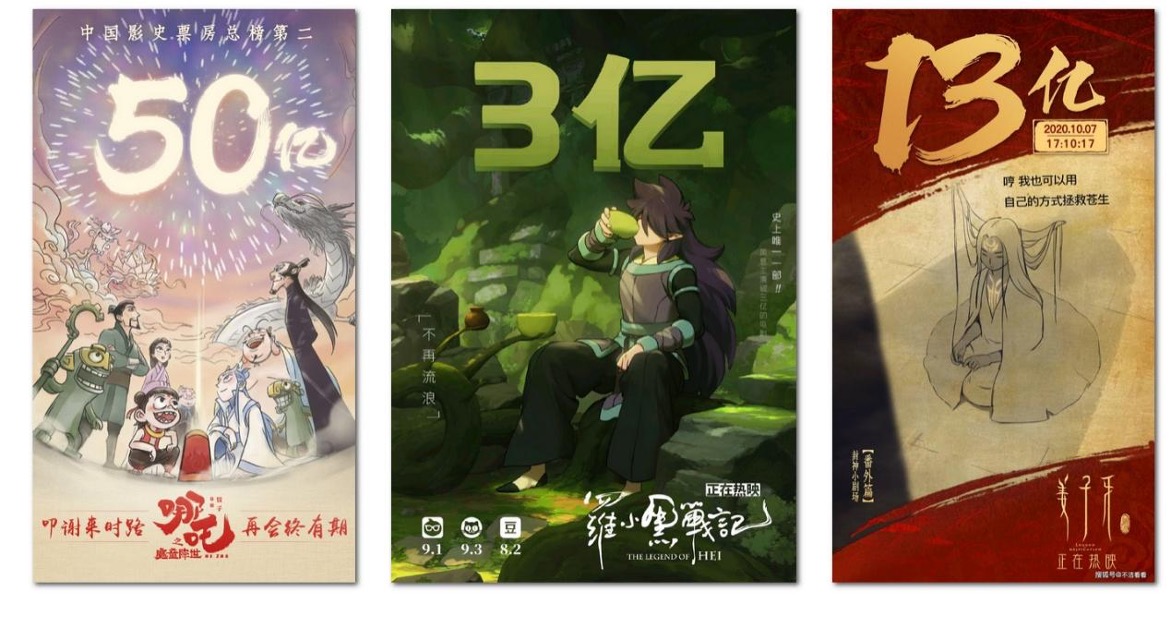
Fig 3: Thank-you images released by Nezha: Birth of the Demon Child (2019), The Legend of Hei (2019), and Legend of Deification (2020) after achieving box office success (images from the official Weibo accounts of the animations).
Furthermore, many creators have started adapting their work in response to fan input. For example, following feedback from viewers, the production team of Scumbag System revised its character animation models (Figure 4). Similarly, Douluo Continent updated its animation models five times over four years to better satisfy fan expectations (Figure 5). In a more immediate response, the team behind Heaven Official’s Blessing decided to recast voice actors just one day after the initial announcement to address fan concerns.
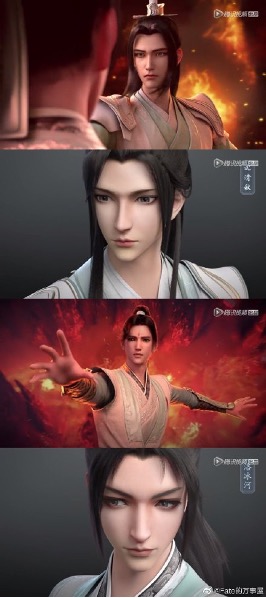
Fig 4: Comparison of the same character model from Scumbag System (2020) during the teaser phase (red background) and the official release (black background) (Image Source: Sina Weibo user “Fate’s Everything Shop”).

Fig 5: Different character models of the protagonist Tang San in the animation Douluo Continent (2018).
Conclusion
In summary, while traditional animation scholarship often characterizes Chinese animation as targeting a singular audience of “children,” the reality is far more complex. The perception, positioning, and treatment of audiences by Chinese animation—as well as the audiences themselves—have evolved significantly across different developmental stages, resulting in distinct and shifting characteristics.
Examining the rise and evolution of fan culture in Chinese animation reveals a crucial insight: for Chinese animation to become a global cultural brand—comparable in influence to major international holidays or franchises—it must actively harness the power of its fans. This explains why, despite the production of high-quality works during both the chaotic early years and the embryonic stages of fan culture, many animations failed to achieve sustained attention or broad cultural impact. Without meaningful engagement with fans or effective market cultivation, even exceptional works struggled to maintain momentum.
It was only through the awakening of fan consciousness among both audiences and copyright holders that a mutually beneficial and dynamic animation ecosystem began to emerge—one capable of supporting lasting artistic and commercial success.
[1] People’s Daily Online. “‘The Rise of The Devil Child’ Ignites Confidence in China’s Animation Financing Market,” July 31 2019, accessed August 12 2024, https://baijiahao.baidu.com/s?id=1642011043490556029&wfr=spider&for=pc
[2] “Pen Drawing Film to be Produced,” Shen Bao (Local Supplement), June 4, 1924.
[3] “Great Wall Company’s The Studio Uproar Premieres in the U.S.,” Shen Bao (Local Supplement), September 30, 1927.
[4] “The Moving Humorous Pictures of Great Wall Picture Company,” Shen Bao (Local Supplement), May 10, 1927.
[5] Li Baochuan, A Study of Wan Laiming (Chengdu: Sichuan Fine Arts Publishing House 2016), 14.
[6] “Yang Zuotao Produces Humorous Cartoons,” Shen Bao, January 28, 1924.
[7] “Great Wall Company’s The Studio Uproar Premieres in the U.S.,” Shen Bao (Local Supplement), September 30, 1927.
[8] Mtime.com: “The ‘Pleasant Goat and Big Big Wolf’ Phenomenon and the Behind-the-Scenes Story of Its Success: Seven Steps to Success,” February 2 2010, accessed August 12, 2024, https://yule.sohu.com/20100202/n270002510_1.shtml
[9] The emphasis on children as the primary audience for Chinese television animation stems from the impact of several key documents issued in 2004. These include the Central Committee of the Communist Party of China and the State Council’s “Opinions on Further Strengthening and Improving the Ideological and Moral Construction of Minors,” as well as three directives from the General Administration of Press and Publication: the “Notice on Further Improving the Coverage of the CCTV Children’s Channel,” the “Notice on Establishing Children’s Channels,” and the “Opinions on Developing China’s Film and Animation Industry.” These documents tightly linked Chinese animation with children’s channels, positioning them as the preferred cultural products for children.
[10] Manga Insight: “From a Valuation of 100 billion to Disappearing from the Spotlight: Why Did 3000 Whys of Blue Cat Fall from Grace?” August 30, 2018, accessed Aug 12 2024, https://www.sohu.com/a/250884728_100172716
[11] One Hundred Thousand Bad Jokes Official Animation Website, “Final Chapter of the Crowdfunding Project for the One Hundred Thousand Bad Jokes Movie: A Look at the Sponsors”, March 29 2013, accessed Aug 12 2024, https://www.u17.com/z/zt/10w/news/newsview.html?news_id=3708?b=0&s=0
[12] Go Chao, “One Hundred Thousand Bad Jokes Turns into a ‘Myth’ as the First Film of the Year to Break 100 Million at the Box Office,” Huaxi Metropolis Daily, January 15 2015, accessed August 12 2024, https://tech.ifeng.com/a/20150115/40944898_0.shtml
[13] Henry Jenkins, Textual Poachers: Television Fans and Participatory Culture (London: Routledge, 2012).
[14] Pierre Bourdieu, The Rules of Art: Genesis and Structure of the Literary Field (Redwood City: Stanford University Press, 1996).
Bio:
Mengxue Wei is a lecturer at the School of Communication, Fujian Normal University. She received her Ph.D. in Art Theory from Zhejiang University in 2023. Dr. Wei’s research spans film and television culture, media studies, and audience research, with a particular interest in interdisciplinary approaches drawing on communication and sociology.
