By Yanyun Chen
Her gilded brownness is infinite.
Who is her body?
Long Live the New Fle$h, 2020
Gold is a crime. The story begins with an accusation of vandalism—of land in gold. It is no surprise that this coveted nugget, which has triggered a long history of brutal wars, bloody conflict, and mass colonization, drew yet another moment of tension. The players, this time, involved contemporary artist Priyageetha Dia, the Jalan Besar Town Council which oversees common property in government subsidized housing estates in Singapore, Priyageetha’s neighbors living in Jalan Rajah estate, and the online vitriol that ensued.[1]
Gold is soft. Priyageetha had been gilding latex soft sculptures, cast from objects around her home in an act to honor intimate space. Her research at the time pondered over Merleau-Ponty’s phenomenology of space and being-in-the-world: what is home in relation to ourselves? Beyond the domestic threshold, in honor of public passages which held her tenderly, Priyageetha “gilded” the dull, grey staircase outside her doorstep as part of her final year project at LASALLE College of the Arts (Figure 1). The project was a 6-hour alchemic affair. Coated steps shimmered under the harsh fluorescent lights. Prominent playwright Alfian Sa’at describes the transformation aptly, “the profane was given the touch of the sacred.”[2] However, such a sanctified act of reverence was not permissible under the Town Council’s (Common Property and Open Spaces) By-laws.[3] A criminal lawyer was consulted. Meetings were held. Journalists knocked on doors. Photographers and Social Media pilgrims visited the space. Anonymous arm-chair critics spewed hate and death threats online. Gold, out of place, flourishing in the mundane, became a hotbed for discussion: what constitutes art in public spaces?

Figure 1: Priyageetha transforms the grey staircase into a golden one. Photo from https://tnp.straitstimes.com/news/singapore/grey-again-hint-glint
Gold is denied. A week later, she removed the Golden Staircase (2017), leaving behind a small memento and an echo, “Till we meet again.”[4] That, which has always been a symbol of wealth and prestige, animated a heated debate around art’s relationship with public space, transforming gold’s gleaming value into arduous labor: that bureaucratic time of licensing, permissions, and consultation was more important than the economic potential of the material and its application. Gold, in this case, was neither ever-lasting nor prestigious. All that glitters must be controlled.[5]
Gold is a trace. The gold square left behind glints with mischief. Priyageetha considers the work as a translation of her identity through material. She had always insisted on documenting her work herself, since the remnant and representation of an artwork available for future interpretation and discourse is limited to the accessibility of its archive. Images, artefacts, articles, and data “create the essence of the work, and form part of the work as well.”[6] Misunderstandings and meaning are certainly animated by such leftovers, from which we derive our histories.
Gold is history. One is reminded that the history of vandalism began with the destruction and plundering of art, and all that is “beautiful or venerable,” by the Vandal King Gaiseric and his Germanic tribe which sacked Rome in 455 AD.[7] Stories built up through fragments of material memories, are a leap of faith and narrative through time. Time speeds up the in-betweens. It is a risky business to place the Golden Staircase, the etymology of the term vandal, and the By-Laws of a Town Council together, for it devalues gold, art, and public space–economy, culture, and territory–the very things a government purports to protect. Who is the vandal here?
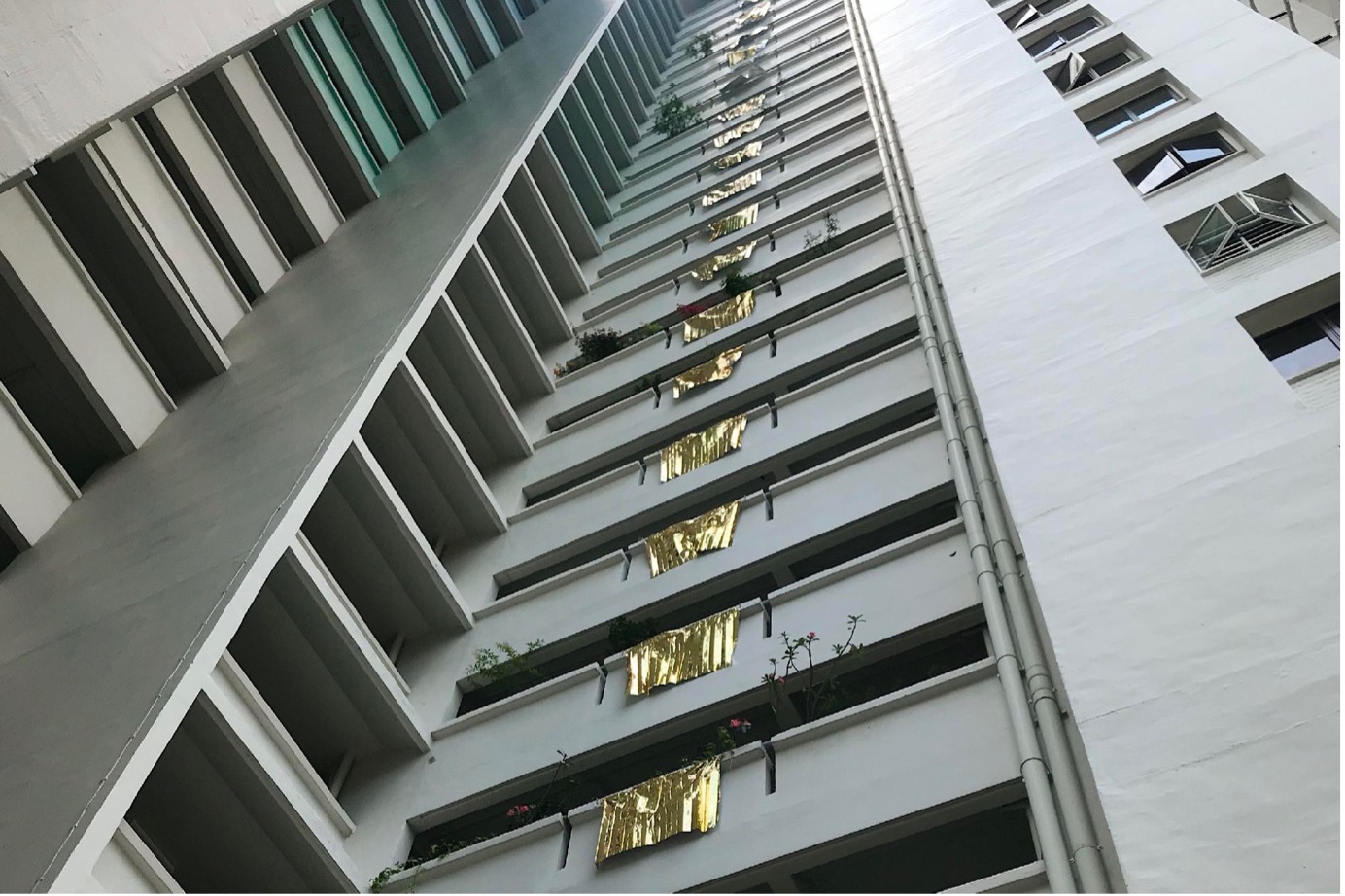
Figure 2: Absent – Present (2018). Photograph courtesy of artist.
Gold is territory. While Golden Staircase remains an artistic expression of sanctuary, site-specific installation Absent – Present (2018) is a reaction (Figure 2). “This was a year after, and I was basically leaving this space, due to personal reasons. I wanted to look at this entire block as a space of lived experience,” Priyageetha shares.[8] About the rationale for installing golden flags, she explains:
By draping golden flags over every floor, I wanted to play around with the impression of ownership over this particular block of flats. Looking at the nationalistic routine of hanging the state flag every year on National Day, I wanted to look at this act as a way of celebrating this space that I had been living in since young. Architecturally its physical qualities are monotonous and rigid, until the series of flags were hung over the ledge on every floor. The qualities of the mylar foil illuminated the entire block. The work involved ideas on the production of space and spatial relations, the structural and political systems that are contained within public spaces, on arts licensing and my own identity as an artist.[9]
A piece of golden mylar imbued with symbolic meaning, communicative power, and visible presence hangs and flutters. They were playful, noisy, animated, and (mis)read as national obligation, Chinese funerary offering papers kim zua, as refugee blankets during humanitarian crises, as territorial markers, as trash, as currency. Gold-as-flags extend another dimension to how we understand gold. The flags were soon discarded by the authorities, Priyageetha discovered after the fact. This time, gold was not worth any bureaucratic time.

Figure 3: Birth I (2018). Photograph courtesy of artist.
Gold is an armor. Responding to the misogyny and online vitriol she had to face from these early works, gold became an armor to be worn. In Birth I and II (2018) (Figure 3), she adorns herself in gold foil, and transforms into a “subject of objectification and observation.”[10] This nude gold creature, a mythological protagonist both vulnerable and divine, traverses abandoned public housing estates of Dakota. The embellishment formed a shield while “the personal became public.”[11] In a sense, authority is reclaimed from an invisible bureaucracy to a breathing, living body trespassing, interjecting, intervening.
the female form, nude,
Gold-clad, its sacredness, ritual
And deification
Fragile vulnerability
Onto the openness of a public one
demands its attention
Gold is memory. In her research on material history, Priyageetha discovered that her grandfather was in the jewelry-making trade until his early death from cancer.[12] She describes, “My ancestral background is so diverse. They were blacksmiths and goldsmiths, and there was also the plantation connection. There is a diversified understanding of materiality within my family.”[13] Gold served as a site to investigate gender, identity, colonial history, and her role in art.
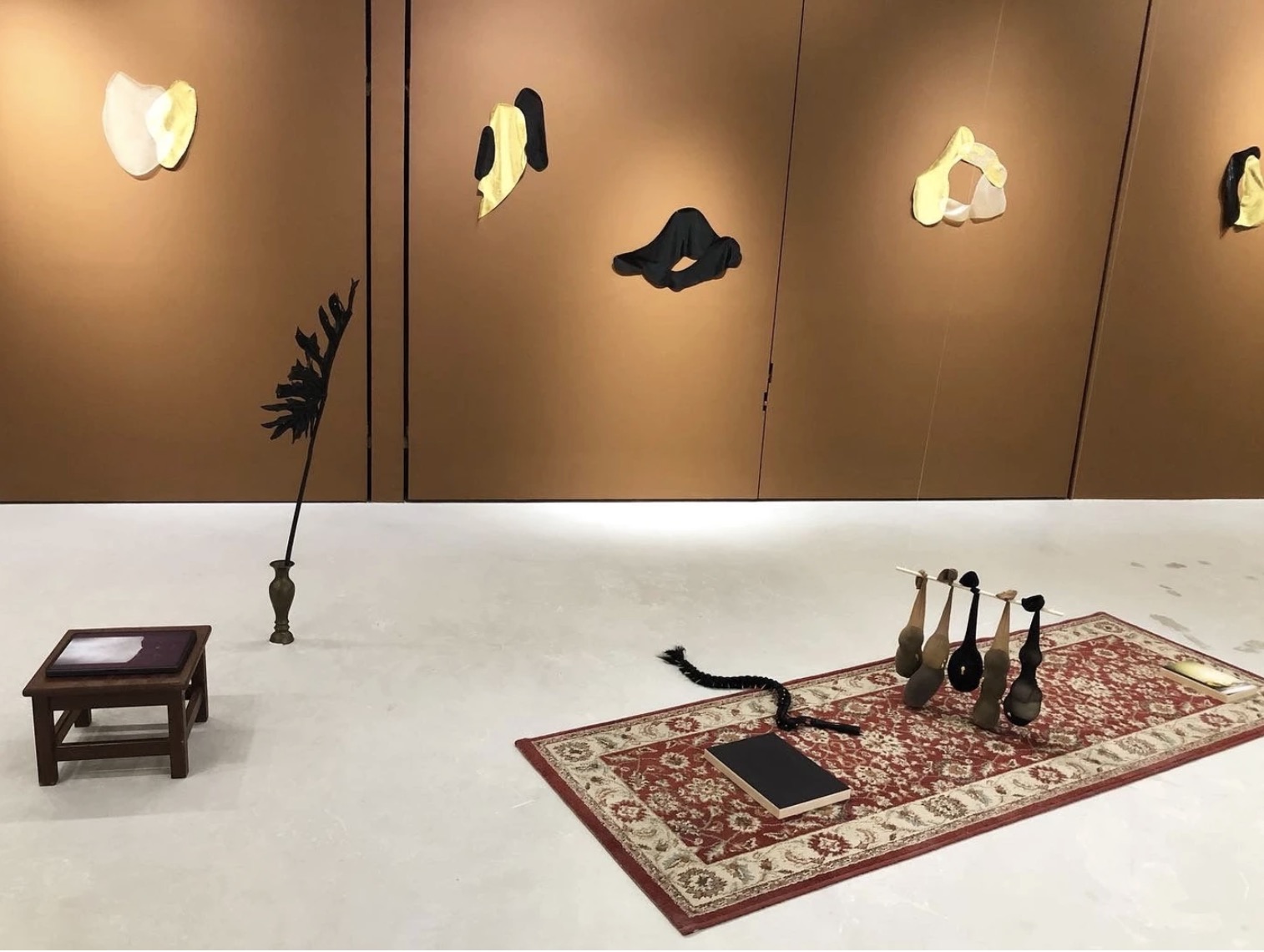
Figure 4: The Earth and Her Skin (2020). Photo from https://www.kimberlyshen.com/the-earth-and-her-skin?pgid=k8sk7i1n-efb383b2-4bfd-413a-bc9c-ce84ecbcaf7e
Gold is a gesture. In The Earth and Her Skin (2020) (Figure 4), Priyageetha adorns the soft brown body with golden hues, and injects her with rage. Curated by Kimberly Shen, it was an “ode and manifesto of female agency.”[14] The Medusa, “a terrifying yet excruciatingly beautiful woman” became the basis for her mythical construction of her golden goddess. She describes a “transformative potential of brown female anger in the reclamation of the self, identity and narrative,” activating the trope and allegories of a female antagonist to wrestle with “private/public, body/space, and castration/desire.” Within the brown walls is a carpet, housing hair whips, clusters of soft sculptural breasts, phallic statues, and other fetishized objects that embody her Indian identity.
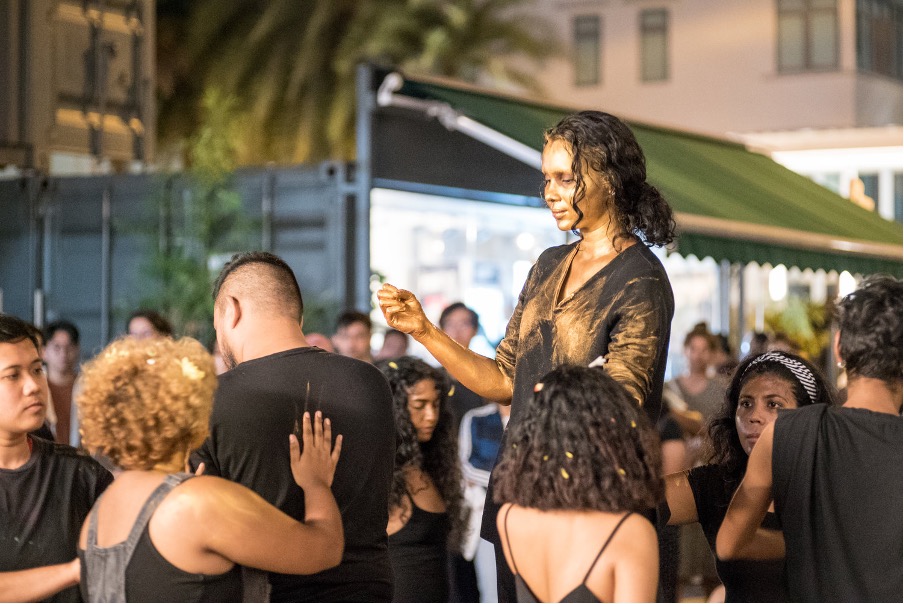
Figure 5: contemplation/reclamation (2018-2021). Photo from https://twitter.com/ArtSciMuseum/status/1236623395875221506/photo/1
Gold in motion. Once gold anthropomorphized, the goddess flowed towards the collective. “It was a way for ourselves to imagine we are reincarnated, and what does it mean for us to occupy a space within an institution.”[15] The divine feminine drew strength with her Midas touch in the performance work series contemplation/reclamation (2018-2021) (Figure 5) with eight other ethnic minority artists–Atiq, Chand Chandramohan, Div, Divaagar, Ila, nor, Vimal Kumar and Zeha–culminating in a mass of gold painted bodies. The performances are anchored by gestures of sharing power, weaving rituals, honoring the mundane and powerless, claiming visibilities and proclaiming presence. The large gold creature meanders across the concrete terrain. It infects, it protects, it harnesses and shares power. Brown is gold, and gold speaks to a memory. It also speculates a future in the later performance: The Sun Rises in Molten Gold (2020).

Figure 6: Rite of the Time Teller (2021). Photograph courtesy of artist.
Gold is time. Shortly before the onset of Covid-19 restrictions, Priyageetha had travelled to the South Indian state of Tamil Nadu to cities such as Pondicherry, Mahabalipuram, and her ancestral homeland Thanjavur for the first time. Isolated, she shifted towards the video work Rite of the Time Teller (2021) and began a process of working with found footage and archival images. She took on a time-teller character adorned in gold, navigating photo albums with her bodily extensions, through nails and hair (Figure 6). At the end of the film is a portrait of the artist cradling an infant-like form.
Gold is virtual. In her discussion of the cyborg, Donna Haraway considers how science and technology can offer the feminine “fresh source(s) of power.”[16] Covid-19 pandemic caused an interruption, spreading bodies apart. Priyageetha had wondered how to continue and sustain her practice in light of pressing limitations. During the lockdowns, she began to learn Blender and Unreal Engine, open-source software offering a low barrier to entry. Haraway muses, “our machines are disturbingly lively, and we ourselves frighteningly inert,”[17] akin to the situation for most people under lockdown while the online world thrived. Gold began to leak into the virtual, but what is a virtual consciousness for a golden goddess?
Gold is an escape. The 3D animated avatar is Priyageetha’s gold speculative alter-ego, a virtual alternate to her AFK (Away from the Keyboard) body. It is visible, ever-present, inter-connected yet porous and affiliated with the physical body of the artist. Technology enables a new identity in cyberspace, and floating amidst the endless code, she can construct her own socio-political environment different from reality. Making and creating become acts of speculation and resistance. Or is it escapism from existing hierarchies of power and tenuous landscapes?
Gold is glitching. A disruption–even corruption–of a system offers a route to knowledge production, perhaps a new status quo. The pandemic has introduced new modes of surveillance from health declarations to biometric scanners, reconfiguring access, redefining boundaries and halting movements. Embedded within the algorithm lies structural discrimination that sinks its teeth in deeper and more insidious ways. Afterall, it was their precondition for design. This is what Ruha Benjamin’s Race after Technology: Abolitionist Tools for the New Jim Code argues, that race as technology is “a tool for vision and division with often deadly results.”[18]
Gold is fragile. Under the invitation from curator Syaheedah Iskandar, National Gallery’s An Exercise of Meaning in a Glitch Season, Priyageetha responds to Benjamin’s call to reimagine technology with empathy: for a more careful, democratic, and considered approach, for a kind of thinness, as Russell Legacy puts it:
Thinness allows greater elasticity, engaging fields of thought and action too often disconnected. This analytic flexibility, in my view, is an antidote to digital disconnection, tracing links between individual and institutional, mundane and spectacular, desirable and deadly in a way that troubles easy distinctions. At the same time, thin description is a method of respecting particular kinds of boundaries. Thinness is not an analytic failure, but an acceptance of fragility … a methodological counterpoint to the hubris that animates so much tech development.[19]

Figure 7: Long Live the New Fle$h (2020) at National Gallery Singapore. Photograph courtesy of artist.
Priyageetha’s independent, self-taught journey was a meandering one. Yet, it is the heroine’s journey for her golden goddess to come alive in the virtual world. Long Live the New Fle$h (2020) (Figure 7) taps into Legacy Russell’s concept of “investing in a cosmic becoming,” and à la the spirit of glitch feminism, “views these acts of experimentation as pathways toward a blooming of selfhood.” Priyageetha explains, “At this point, I didn’t know how to render, I didn’t even know what rendering was. What I did was to screen record my entire video with my avatar moving around this blue screen.”[20] Virtual echoes the real, informing offline existences. However, unlike the accidental nature of error and acceptance for its generative potential in Russell’s manifesto, Priyageetha’s avatar’s glitch set in a blue screen of death is one that is intentionally produced by data-moshing. Glitch is tactical, as Priyageetha says, “I thought it was very apt to think about this body navigating this (institutional) space, to think about gender and racial trauma within the body, how the frame morphs into one another, how they fracture, and it becomes a failure to understand, or to read this body in this machine.”[21]

Figure 8: A film still from Blood Sun (2022).
Gold is running. Priyageetha’s avatar runs within the crossroads of traffic in Blood Sun (2022) (Figure 8). At this time, she was reading Octavia Butler’s Lilith’s Brood, about an alien colonizer Oankali attempting to revive, heal, and civilize the earth. The hands of a Malayan tiger-human hybrid caresses the post-apocalyptic landscape. The motion continues in the video we.remain.in.multiple.motions_Malaya (2022), sifting through colonial representations of laboring bodies, calling for “new forms and ethics of remembrance by an artist whose use of technology consciously dismisses its claims to neutrality and immateriality.”[22] Golden hands symbolizes labor, fold, twist, and stretch across the walls. Researching colonial exploitation of plantation workers under the British Empire, she uses 3D animation to bring together voices in Tamil and Malay, twisting the sociological perspective to that of a Tamil descendent, speculatively reclaiming her historical narrative through “appropriation of stock images of Malayan rubber plantations that one can easily excavate from search engines.” The line of exploitation trembles in the gallery space. It is all a game. Here, disembodied, hinting at anatomical parts, but never the full figure. As Anca Rujoiu puts it:
Computer-generated imagery (CGI) sits in a continuum with other materials, from screen printed works on latex, sublimation fabric prints to vinyl on walls and barren soil. The mechanisms of continuity are key to the artist’s argument: corporate digitization and commodification of colonial archives contribute to a legacy of control and dispossession; digital technologies persist in the exploitation of natural resources and labor while concurrently obscuring their physical presence.[23]

Figure 9: The Sea is a Blue Memory (2022). Photograph courtesy of artist.
Gold is blue. Gold turns cold in The Sea is a Blue Memory (2022), signaling its departure (Figure 9). As technical skills upgrade, the avatar begins to resemble the artist’s actual features, gold is deemphasized for a midnight blue within the specter of a high-quality render. She stands in the middle of the gentle dark waves, the sun glistens on the artificial liquid surface. The protagonist’s pale face becomes white, as the ocean turns into a hue echoing the blue-screen-of-death. The word Malaya is engraved on her spine. She is pensive, staring into the distance.

Figure 10: LAMENT H.E.A.T. (2023). Photograph courtesy of artist.
Gold is aflame. In LAMENT H.E.A.T., presented at Singapore Art Museum Contemporaries: Residues & Remixes 2023, the rubber plantation catches fire. Drones drift across the 3rd_Space, with the haunting oppari, a Tamil lamentation practice by Dalits (Figure 10). In this work, the song is a reimagining through H.E.A.T. (Hevea Errichal Automation Tech), a speculative technological non-human entity performing collective grief and remembrance. The arguments lightly touched here about animation are not new in story craft, but Priyageetha’s approach lights up open, porous channels between personal mythology, critical theory, physical reality and animated virtual reality for an artists-at-play-in-practice. Her entry into animation from contemporary art can be seen as an example of shape-shifting artistic practices: constantly finding terrain, gaining strength through multiple techniques, admitting vulnerability, and always acknowledging the hiccups as it speculates a new future. Benjamin Ruha reminds us that we can shift away from “technology as an outcome to toolmaking as a practice.”[24] These practices that incorporate slow learning processes shape better futures for ourselves and others.
It admits that what we make influences, teaches, becomes, recreates us; how we tell our own narratives changes the way we solve problems and think of, for, with ourselves. Afterall, “genealogies reflect and reproduce power relations.”[25] It shifts power from side to side, and in such momentum, cracks open moments of escape, lines of flight, momentary glitches…
Priyageetha Dia holds onto gold, materially, virtually, and then lets it go.
She animates gold. What do we animate?
[1] The artist will be referred to with her first name ‘Priyageetha’ for the essay, rather than her last name, to respect her preferences. “It’s art, not vandalism, says student behind golden staircase,” in The Straits Times (Singapore), March 9, 2017. https://www.straitstimes.com/singapore/its-art-not-vandalism-says-student-behind-golden-staircase
[2] Alfian Sa’at, “Staircase artwork by Priyageetha Dia depicts a reverse-Midas scenario,” in The Online Citizen (Singapore), March 13, 2017. https://www.theonlinecitizen.com/2017/03/13/staircase-artwork-by-priyageetha-dia-depicts-a-reverse-midas-scenario/
[3] “It’s art, not vandalism,” says student behind golden staircase.” The Straits Times (Singapore), March 9, 2017.https://www.straitstimes.com/singapore/its-art-not-vandalism-says-student-behind-golden-staircase
[4] Hui Min Chew, “Art student returns golden staircase to grey concrete.” The Straits Times (Singapore), March 12, 2017. https://www.straitstimes.com/singapore/art-student-returns-golden-staircase-to-grey-concrete?utm_campaign=Echobox&utm_medium=Social&utm_source=Facebook&xtor=CS1-10&fbclid=IwAR3Y2aTEFvHz6h_OkEjCL6Br1IVnB0irnSqKewWPy6OdDs6v57tt1QrBgJA#link_time=1489288740
[5] Alfian Sa’at, “Staircase artwork by Priyageetha Dia depicts a reverse-Midas scenario.” The Online Citizen (Singapore), March 13, 2017. https://www.theonlinecitizen.com/2017/03/13/staircase-artwork-by-priyageetha-dia-depicts-a-reverse-midas-scenario/
[6] “Priyageetha Dia on The Colour of Divinity, Evolving as an Artist and Dismantling Patriarchal Structures,” in Object Lessons Space (Singapore), September 2019. https://objectlessons.space/Priyageetha-Dia-on-The-Colour-of-Divinity-Evolving-as-an-Artist-and
[7] “Vandal (n.)” Etymonline. https://www.etymonline.com/word/vandal?ref=etymonline_crossreference
[8] Priyageetha Dia, zoom interview by author. May 29, 2023
[9] Priyageetha edited and clarified points in the original citation on June 21, 2023 via google doc. “Priyageetha Dia on The Colour of Divinity, Evolving as an Artist and Dismantling Patriarchal Structures,” in Object Lessons Space (Singapore), September 2019. https://objectlessons.space/Priyageetha-Dia-on-The-Colour-of-Divinity-Evolving-as-an-Artist-and
[10] Ibid.
[11] Ibid.
[12] Eva Wong Nava, “Female Midas Depicts Alternative Golden Perspective Through Visual Art,” in Artlyst, April 8, 2018. https://artlyst.com/features/female-midas-depicts-alternative-golden-perspective-visual-art/
[13] Priyageetha Dia, zoom interview by author. May 29, 2023
[14] Kimberly Shen, “Curatorial Notes: the earth and her skin,” in Art Porters Gallery (Singapore), March 21, 2020. https://www.artporters.com/wp-content/uploads/2020/03/the-earth-and-her-skin_Catalogue_compressed.pdf
[15] Priyageetha Dia, zoom interview by author. May 29, 2023.
[16] Donna Haraway, “A Cyborg Manifesto: Science, Technology, and Socialist-Feminism in the Late Twentieth Century,” in Simians, Cyborgs and Women: The Reinvention of Nature (New York: Routledge, 1991), 149-181.
[17] Haraway, 152.
[18] Ruha Benjamin, Race After Technology: Abolitionist Tools for the New Jim Code (Cambridge: Polity, 2019), 37.
[19] Legacy Russell, Glitch Feminism: A Manifesto (London: Verso, 2020), 45.
[20] Priyageetha Dia, zoom interview by author. May 29, 2023
[21] Ibid.
[22] Anca Rujoiu, “Forget me, Forget me not” yeo workshop (Singapore), May 21, 2022. https://www.yeoworkshop.com/viewing-room/14-forget-me-forget-me-not-priyageetha-dia/
[23] Ibid.
[24] Ruha Benjamin, Race After Technology: Abolitionist Tools for the New Jim Code (Cambridge: Polity, 2019),173.
[25] Ruha Benjamin. 180.
Bio:
Dr. Yanyun Chen (Singapore) is a visual artist, researcher, and professor. She runs a drawing, new media and installation practice. Her works delve into the aesthetic, cultural and technological inheritances on one’s body, unravelling fictional and philosophical notions of embodiment, heritage, and legacies. These interdisciplinary works are grounded in the physicality of human and botanical forms. Her areas of research include Southeast Asian contemporary art, animation studies, and visual art pedagogies. Chen graduated from the European Graduate School Philosophy, Art, and Critical Thought PhD programme (2018), its Communications MA programme (2014), and Nanyang Technological University School of Art Design and Media Digital Animation programme (2009).
She is a Professor of Practice in Drawing and Painting at Tufts University School of Museum of Fine Arts in Boston, MA, USA. She was the Andreas Teoh Contemporary Asian Art Fellow (2021-2022), Georgette Chen Fellow (2020-2022) and Lecturer for the Humanities division of Yale-NUS College in Singapore (2015-2023). She also taught at Nanyang Technological University in Singapore (2014-2018). Outside of academia, she is the founder of illustration and animation studio Piplatchka, and co-founded publishing house Delere Press LLP. She received the prestigious Singapore National Arts Council Young Artist Award (2020) and ArtOutreach IMPART Visual Artist Award (2019).
