By Xiaochang Liang
In the summer of 2026, the CGI (computer-generated-imagery) animated film Niulai (牛来, dir. Xin Yumeng 信雨萌) (Figure 1) gains unexpected popularity in Chinese cinemas via a totally different trajectory compared to that of other successful Chinese animated films. It first entered the public through its overly low box office, which remains below RMB 10,000 after nine days. Then, through pirated screen recordings, clips of its most striking audiovisual features—coarse modeling, stiff character movement, sound-image mismatches—have been quickly circulated across platforms. The film soon became a viral topic, followed by an apparent rise in screenings and ticket sales.
It is no exaggeration to say that Niulai’s visual presentation is far from simple technical backwardness. One of the most endorsed comments on Douban described Niulai as “so unbelievably bad that it was eye-opening,” comparing its animation to that of a computer game made twenty years earlier.[1] It is even regarded as “a symbol of the new internet troll culture.”[2] So, how could this film attract so much attention and bring a growing number of viewers into cinemas? I argue that the answer lies in its anachronistic technique and glitched spectacle. In a unique and unrepeatable way, low-tech CGI production turns the shortcomings of animation into watchable events, shifting the attraction from the story itself to the process of recognizing, waiting for, and collectively witnessing such a failure.
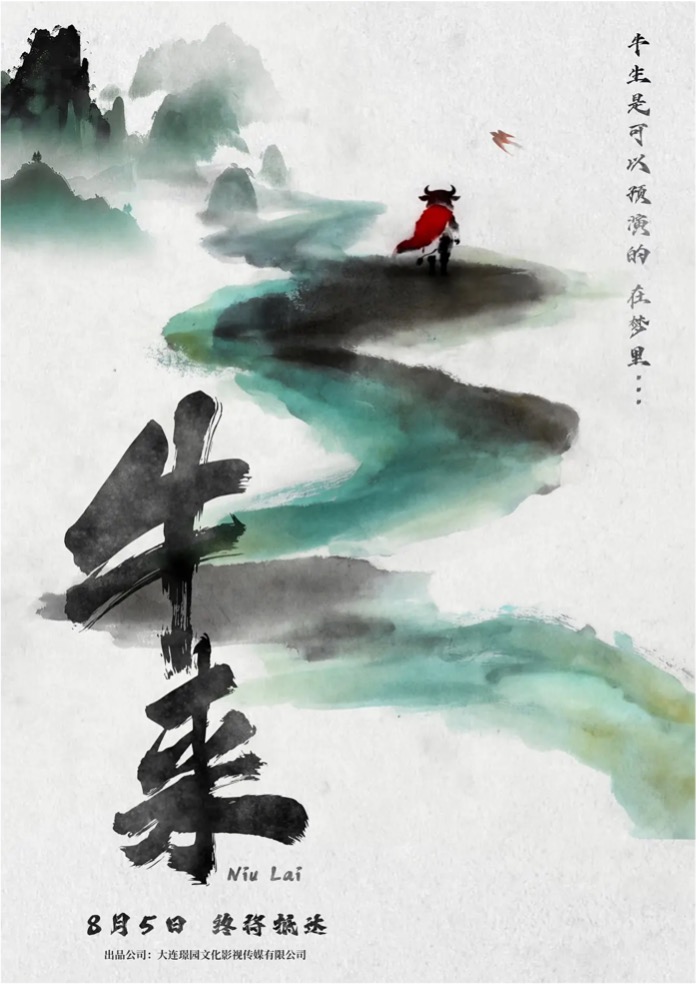
Figure 1. Niulai’s official poster
An Unusual Chinese Cinema Event and the Shift in Viewing Focus
Released on August 5, 2026, Niulai presents a coming-of-age story of a calf named Niulai 牛来. It follows his mother’s selfless love and his friendship with a leopard named Baola 豹拉[3], who is expelled from the herd because he is a carnivore. After a wolf attack, the cattle embark on a migration. Niulai’s mother sacrifices herself to protect her child, before the ending reveals that the journey has been a dream. Friendship, acceptance, growth, and maternal love constitute an allegory for young children. However, what is more capturing is the inferior audiovisual expression. Viewers cannot help focusing on these visibly poor-quality images and the production process behind them.
The end credits list an unusually small, two-person team: Xin Yumeng and Sun Lifang 孙丽芳 (also Xin’s mother), who, lack of professional animation training, are responsible for directing, screenwriting, voice acting, producing, among all the duties. As China Youth Daily explains, technical review only tests projection safety and stability, including bad frames, prolonged black screens, and decoding failure, rather than the quality of modeling or animation.[4] A production of this scale, with images close to an unfinished animation creation, could therefore qualify for a release permit and enter commercial cinemas without violating existing regulations. Niulai’s unusual production and circulation history, together with extensive negative, and sometimes malicious commentary, instead serves as a reverse promotion.
According to The Beijing News, nine days after its release, the film had earned only RMB 7,352 and attracted fewer than 300 admissions. After the phrase “Niulai’s box office is RMB 7,352, with no ‘ten-thousand’ after it” began trending, the number of daily screenings rose from 21 on August 14 to 359 on August 15.[5] By August 22, as Maoyan Professional Edition puts, its cumulative box office has reached RMB 38.71 million.[6]
This market curve broke the implicit contract between a film and its viewers. Conventional word of mouth attracts potential viewers through a film’s perceived strengths. In 2015, for instance, a form of spontaneous audience promotion known as zilaishui 自来水 emerged after the release of Monkey King: Hero is Back (西游记之大圣归来, dir. Tian Xiaopeng 田晓鹏), an animated film praised for its spectacular CGI and compelling narrative.[7] With the support of zilaishui, Chinese animation reentered the mainstream Chinese cinema market among other popular live-action features after nearly two decades of silence. Niulai, nevertheless, generates a desire for “admiring” its weakness. Negative evaluation became a reason for attendance.
Short-video circulation reinforced this structure. A lot of poor-quality scenes, actions, and dubbing from Niulai circulated on Douyin, Bilibili, Xiaohongshu (RedNote), and Weibo. These extracted clips deconstruct the logic within character relationships and narrative contexts, appeared as independent comic displays. Viewers first locate faults on their phones, then enter cinemas, wait for them to occur, and laugh at them in an immersive way. They also try to dig out further errors to recirculate online. In this circuit, platforms create the index of faults, while cinemas reproduce it collectively—theatrical screenings become participatory experiences, a private discovery of faults becomes a shared expectation.
Technical Anachronism and the Attraction of Low-Tech Images
Tom Gunning uses “cinema of attractions” to describe the exhibitionist and visually impactful logic of early cinema, in which acts and forms of display, instead of narrative, carry more weight for the spectator.[8] Early cinema produced astonishment through images that audiences had not previously encountered. Niulai, by contrast, sustains attention and curiosity through technical gaps—in other words, visual features that have become rare and conspicuously outdated on a contemporary cinema screen. It thus embodies an alternative attraction: the unexpected glitched spectacle created by the failure of today’s CGI.
This attraction needs to be understood within the industrial context of Chinese CGI animation. Recent Chinese CGI animated films have emphasized technical development through meticulous rendering and simulation of fur, fluids, complex lighting, and large-scale environments. Ne Zha 2 (哪吒之魔童闹海, dir. Jiaozi 饺子, 2025) serves as a prominent example. The film demonstrates a great amount of simulation effects, monumental spaces, and hyperkinetic battle scenes through advanced CGI techniques such as large-scale crowd simulation, intelligent sea wave algorithm, and particle ink technique (Figure 2). Mihaela Mihailova describes this aesthetic as “spectacular digital maximalism,” in which digital technique itself become a core object of display.[9] The emphasis on CGI technology is also framed by mainstream reports in national terms. For instance, Ne Zha 2 was deemed as “a fine technical advertisement for what the country is capable of.”[10] Such discourse positions technological sophistication as a form of soft power and gives technological advancement a central place in the development of Chinese animation. Similar priorities have also been noticed in other popular Chinese CGI animation, such as Ne Zha (哪吒之魔童降世, dir. Jiaozi, 2019), White Snake (白蛇:缘起, dirs. Huang Jiakang 黄家康 and Zhao Ji 赵霁, 2019), Green Snake (白蛇2:青蛇劫起, dir. Huang Jiakang, 2021), and Deep Sea (深海, dir. Tian Xiaopeng, 2023). Viewers, at the same time, have become increasingly adapted to such “maximalist” visual standard. Of course, crude animation remains common outside cinemas, but an 86-minute work of considerable crudeness is rarely encountered in commercial cinema. The greater Niulai’s distance from current industrial norms, the more readily that distance itself becomes a spectacle.

Figure 2. The final fight of two floods achieved by intelligent fish school algorithm and particle ink technique in Ne Zha 2
Ernst Bloch’s concept of “nonsynchronism” offers a strong interpretation of this technical anachronism. Bloch argues that a single historical present can contain different temporal layers. Earlier experiences and forms do not disappear in an orderly manner as modernization proceeds.[11] Niulai recalls the 3D appearance of early online shorts, inexpensive television CGI, and student animation. It projects a layered temporality within 2026, the very same year when mature CGI, AI-generated videos, hand-drawn techniques, and primitive digital animation coexist across multiple media. The film is therefore a contemporary product yet technically out of time. As Walter Benjamin contends, forms that have fallen from fashion can recover perceptual force once detached from ordinary use.[12] Currently, it is not completely certain whether this technical backwardness is intentionally caused or simply due to the lack of capability. But whatever its cause, in a screen culture saturated with claims of industrial innovation and rapid AI development, Niulai’s seemingly imminent obsolescence becomes rare enough to be seen anew. This technical anachronism is triggering discussions about a digital period left behind by technical progress and reminding the viewers of visibly inferior traces of human labor that had not yet been covered by algorithmic images.
CGI Failures, Narrative Consequences, and Glitched Spectacle
After watching the entire film, I found that Niulai has a basic understanding of shot organization. It uses varied shot sizes, reaction shots, high and low angles, shot/reverse-shot structures, as well as camera movements such as pushes, pulls, and pans to sustain its cinematic language. Its editing is also more frequent than some online clips suggest. However, Niulai’s conventional shot choices are overshadowed by outdated and inadequately polished CGI—its core weakness that fails to translate the creators’ intentions, especially at the level of motion, into convincing visual presentations.
The shot of Niulai falling provides a clear example. His body, as a single unit seemingly without separated joints, simply rotates and drops. He moves directly from standing to lying on the ground (Figure 3). The sequence of jumping across the river further intensifies the same problem. Little design is evident in his physical movement, such as leg power, upper limb lifting, the arc in the air, or impact on landing. The director merely employs slow-motion shots that gradually zoom in to depict Niulai drawing closer to the opposite bank—and the trees upon it—while in mid-leap. Niulai begins on one side of the river, moves closer and closer, and finally falls on the other. He seems to be flying, however, in a stiff, puppet-like manner (Figure 4).

Figure 3. Niulai falling down in Niulai, stills (16:06, 16:07, 16:08) from pirated screen recording on YouTube, https://youtu.be/Pt3zkkXFLmY?si=T1cQhA4yvLS1zS9u

Figure 4. Niulai jumping across the river in Niulai, stills (22:00, 22:04, 22:17) from pirated screen recording on YouTube, https://youtu.be/Pt3zkkXFLmY?si=T1cQhA4yvLS1zS9u
Both examples point to its insufficient animation polish. And the keyframe animation here conveys only positional information, failing to achieve the basic bodily mechanism that makes movements persuasive. From my perspective, such insufficiency is mostly due to the lack of production capability, other than artistic or metaphorical intentions. In most 3D animations, anticipation, timing, slow in and slow out, arcs, and follow-through or overlapping action serve as central principles for translating key poses into convincing movement.[13] Niulai, by contrast, frequently relies on constant-speed translation and whole-body rotation, as their feet always slide or hover above, instead of firmly rooting in the ground, making characters appear to be dragged by their rig controllers.
Niulai’s poor quality in rigging and model design further undermines its expressive coherence. Most creatures are fitted into upright humanoid structures that lack clear animal anatomical articulation (Figure 5). When their limbs bend or stretch, the skin and shape around the joints change only weakly. In addition, facial animation relies on a small set of eyebrow movements and open-or-closed mouth shapes. Blinks, breathing, transitions between expressions are limited, causing any emotion, such as fear, grief, and excitement, remain difficult to read from the characters’ faces. The extensive reuse of assets extends this rigidity to the environment. The same trees, rocks, and grass recur throughout the film. Crowd characters often share identical models, poses, and repeated motions with little variation.
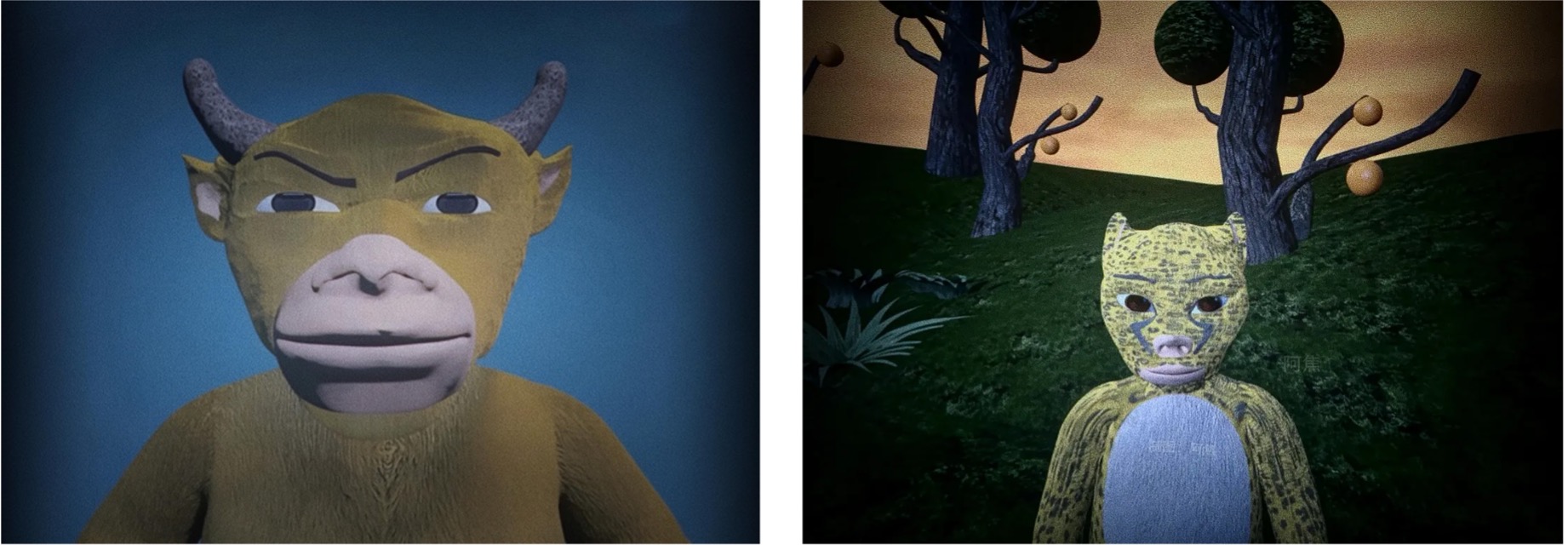
Figure 5. The figures of Niulai (left) and Baola (right), stills from Douban, https://movie.douban.com/subject/38581618/photos?type=S
This anachronistic technical capacity, in other words, these limits, also determines what the story can show. Specific action sequences like chases and fights are frequently moved off-screen. This film often cuts to forests, empty landscapes, or character reactions and relies on sound to sustain the action. Long dialogue scenes and close-ups are used to reduce the need for complex full-body animation, physical contact, and the organization of crowds. Most individual shots consequently contain too little spatial or causal information—such as where characters are situated, how they move, or what causes the response—leading to narrative inconsistencies and difficulty in understanding.
Olga Goriunova and Alexei Shulgin distinguish an error from its perceptible manifestation: an error may, yet not always, produce a glitch.[14] Then, a glitch functions as a break from an expected flow of information or meaning, disrupting the transparency of a medium and then exposes its underlying nature.[15] The failures and shortcomings in Niulai generate a similar effect. When mature CGI normally hides models, skeletons, texture maps, and keyframes behind the illusion of autonomous characters and environments, Niulai, instead, brings these structures to the surface through its inferior yet unique on-screen spectacles. It invites another way of viewing in which pushes narrative aside. Such self-revelation therefore constitutes a renewed form of attraction from glitched/failed moments.
Conclusion
On Chinese platforms, many comments compare Niulai with generative AI, claiming that AI could produce animation more easily and with higher visual quality. Seemingly supporting this judgment, a wave of AI-assisted derivative videos have been released quickly, turning this comparison into a public demonstration. A recently uploaded Bilibili short video, Wo Niu Ye Weichang Bu Lai [AI Quanmin Zhizuoren] (《我牛也未尝不来》【AI全民制作人】, created by Hai Ke 嗨刻), for instance, has received more than 603,000 views, 22,000 likes and 11,000 shares by August 22.[16] These works deliberately imitate Niulai’s low-quality style, yet presented with more fluid movements and more vibrant colors. Their circulation further sharpens Niulai’s technical anachronism in the current digital age.
When turning back to the claim that distinguishes Niulai with generative works, an interesting question emerges in my mind: why do audiences have such a strong belief that this film is not created by AI? The opinion that it looks much worse than AI-generated videos lacks sufficient credibility. According to research on generative videos, the major concern of them is how to maintain the visual coherence of identity, texture, and spatial relationships across frames. Even cutting-edge models produce failures include distorted faces and hands, broken topology, warped backgrounds, cross-frame drift, missing object permanence, and fine-detail flicker.[17] In Niulai, however, all the failures are derived from existing model and skeleton, so characters and environments remain almost rigidly stable in comparison to generative videos. It is this apparent coherent inferiority that sets it aside from AI products.
As argued above, this stable, handcrafted roughness endows Niulai with an unusual temporal position. At the intersection of industrial development in Chinese animation, the growing popularity of short-videos, and the rapid expansion of AI-generated images, this film appears as an outsider. Its anachronistic technique and glitched spectacle, however, become a renewed form of attraction.
This attraction still possesses a limit. As Rosa Menkman observes, once a glitch is planned, standardized, reproduced, and domesticated as a filter, it will lose its original power to interrupt an information flow.[18] Likewise, Chinese audiences are highly unlikely to thrust into cinemas for another film with deliberate low quality and frequent errors. Nevertheless, just as Hannah Frank treats the single frame in cel animation as a historical document whose brushstrokes, dust, and irregularities bear traces of labor that is once silenced[19], Niulai offers an alternative way of viewing to reapproach animation technique in this very era. When its CGI fails to maintain a perfect illusion, its material records—models, texture, keyframes, glitches—are brought to the foreground. Viewers return to traces that were meant to be hidden, transforming this technically outdated work into one of the most visible screen events in these years, making low-tech itself become an attraction.
[1] 啦啦啦. “烂得难以置信!也算开眼了!二十年前电脑游戏的动画水平,竟然也能上电影院里骗钱!” [“So Unbelievably Bad That It Was Eye-Opening! Its Animation Looks Like That of a Computer Game Made Twenty Years Ago, Yet It Somehow Made It into Cinemas”]. Short review of Niulai. Douban, August 12, 2026. Translated by the author. Accessed August 21, 2026. https://movie.douban.com/subject/38581618/comments?sort=new_score&status=P.
[2] Fu, Ting. “A Chinese Animated Film Mocked as ‘Terrible’ Becomes a Box-Office Hit.” Associated Press, August 18, 2026. Accessed August 21, 2026. https://apnews.com/article/80a25ad38005f5c6200715a37b704bea.
[3] Baola 豹拉 is not the leopard’s real name. When the leopard introduces himself by saying “我是豹啦” (wo shi bao la, “I’m a leopard”), Niulai mistakes the sentence-final particle la for part of his name and begins calling him Baola.
[4] “粗制滥造的《牛来》,为什么能上映?” [“Why Could the Crudely Made Niulai Be Released?”]. China Youth Daily, August 15, 2026. Republished by Sina Finance. Accessed August 22, 2026. https://finance.sina.cn/2026-08-15/detail-ininmane3340782.d.html?vt=4.
[5] Teng, Chao. “《牛来》靠‘抽象’出圈.” The Beijing News, August 15, 2026. Accessed August 22, 2026. https://www.bjnews.com.cn/detail/1786783512168828.html.
[6] Maoyan Professional Edition. “Niulai.” Cumulative box-office data. Accessed August 22, 2026. https://piaofang.maoyan.com/dashboard.
[7] Jiang, Fei, and Kuo Huang. “Hero Is Back—The Rising of Chinese Audiences: The Demonstration of SHI in Popularizing a Chinese Animation.” Global Media and China 2, no. 2 (2017): 122–137.
[8] Gunning, Tom. “The Cinema of Attraction[s]: Early Film, Its Spectator and the Avant-Garde.” In The Cinema of Attractions Reloaded, edited by Wanda Strauven, 381–88. Amsterdam: Amsterdam University Press, 2006.
[9] Mihailova, Mihaela. “Spectacular Digital Maximalism: Some Thoughts on Ne Zha 2 (2025).” Association for Chinese Animation Studies, March 17, 2025. Accessed August 22, 2026. https://acas.world/2025/03/17/spectacular-digital-maximalism-some-thoughts-on-ne-zha-2/.
[10] Hoad, Phil. “Ne Zha 2 Review: Record-Breaking Animation Is Tale of Demons, Dragons and Dazzling Visuals.” The Guardian, March 20, 2025. Accessed August 22, 2026. https://www.theguardian.com/film/2025/mar/20/ne-zha-2-review-demons-dragons-and-dazzling-visuals-jiaozi.
[11] Bloch, Ernst. “Nonsynchronism and the Obligation to Its Dialectics.” Translated by Mark Ritter. New German Critique, no. 11 (Spring 1977): 22–38.
[12] Benjamin, Walter. “Surrealism: The Last Snapshot of the European Intelligentsia.” In Selected Writings, Volume 2, Part 1: 1927–1930, edited by Michael W. Jennings, Howard Eiland, and Gary Smith, 207–21. Cambridge, MA: Belknap Press of Harvard University Press, 1999.
[13] Lasseter, John. “Principles of Traditional Animation Applied to 3D Computer Animation.” ACM SIGGRAPH Computer Graphics 21, no. 4 (July 1987): 35–44.
[14] Goriunova, Olga, and Alexei Shulgin. “Glitch.” In Software Studies: A Lexicon, edited by Matthew Fuller, 110–19. Cambridge, MA: MIT Press, 2008.
[15] Menkman, Rosa. The Glitch Moment(um). Network Notebooks 04. Amsterdam: Institute of Network Cultures, 2011, 8–11.
[16] 嗨刻. “《我牛也未尝不来》【AI全民制作人】.” Bilibili video, August 16, 2026. Accessed August 22, 2026. https://www.bilibili.com/video/BV1XhbS6KEcF/.
[17] Panambur, Tejas, Ishan Rajendrakumar Dave, Chongjian Ge, Ersin Yumer, and Xue Bai. “CreativeVR: Diffusion-Prior-Guided Approach for Structure and Motion Restoration in Generative and Real Videos.” In Proceedings of the IEEE/CVF Conference on Computer Vision and Pattern Recognition (CVPR) Workshops, 6093–6103. 2026.
[18] Menkman, Rosa. The Glitch Moment(um). Network Notebooks 04. Amsterdam: Institute of Network Cultures, 2011, 44–46, 55.
[19] Frank, Hannah. Frame by Frame: A Materialist Aesthetics of Animated Cartoons. Edited by Daniel Morgan. Oakland: University of California Press, 2019, 15–18.
Bio:
Xiaochang Liang is a PhD student in the Division of Humanities at the Hong Kong University of Science and Technology. His research interests include CGI and AI technological practices, visual cultures, and intermediality in Chinese and Sinophone animation and video games.
)